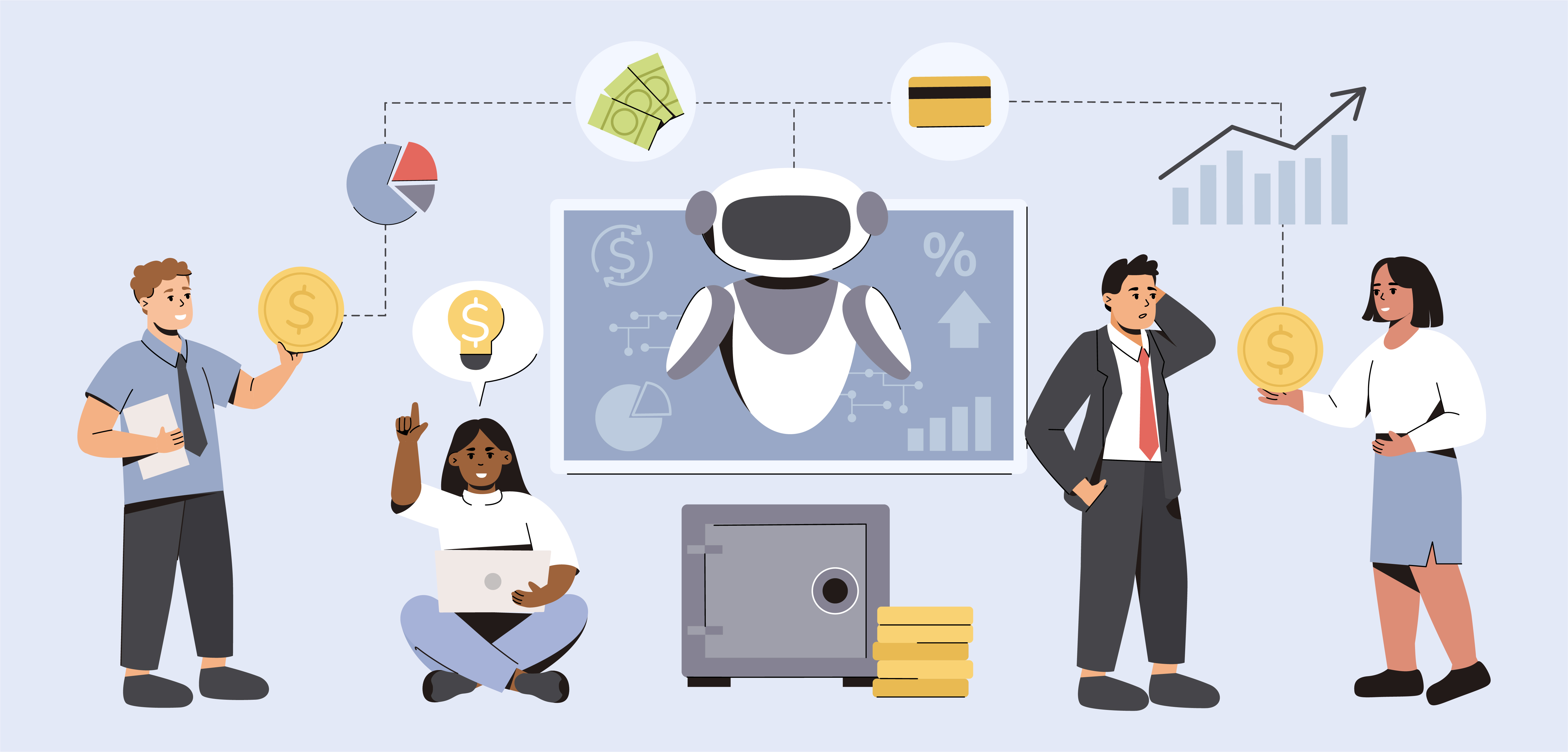
Something has shifted in how business decisions get made, and it is not subtle. Across marketing, finance, operations, and human resources, the dominant pattern is the same: AI tools are performing tasks that were recently considered the exclusive domain of trained professionals. Forecasting models that once required a team of analysts now run overnight and update in real time. Customer segmentation that took weeks of manual data work now adjusts automatically as behaviour changes. Supply chain disruptions are predicted before they occur, not responded to after. This is not a future scenario. It is the operating reality of a growing number of businesses right now, and it is accelerating.
For students studying business, the implications are immediate and personal. The question is no longer whether artificial intelligence in business will matter in their careers. It already does. The question is whether they graduate with enough understanding of how AI works within business contexts to contribute meaningfully in environments where it is already embedded or whether they arrive underprepared for a professional landscape that has moved on without them. That is the gap this blog is designed to close.
- What AI's Presence in Business Actually Means Below the Headlines
- The Quiet Anxiety Sitting Behind Most Business Students Right Now
- Who Needs AI Business Literacy and Why It Cannot Be Deferred
- How Business Education Needs to Respond and What Good Design Looks Like
- Where AI Is Actually Being Applied Function by Function
- The Next Three to Five Years: Where Business Management and AI Converge
- What to Carry Forward From This
- Frequently Asked Questions
What AI's Presence in Business Actually Means Below the Headlines
The role of AI in business is most accurately understood not as automation replacing humans with machines but as augmentation: extending the analytical and operational capacity of human professionals. A marketing manager using an AI-powered customer insights tool is not being replaced. They are being given the ability to make decisions that previously required a team, at a speed that previously required weeks. The manager's judgement, stakeholder relationships, and strategic instincts remain central. What changes is the quality and velocity of the information available to exercise that judgement.
The hidden implication here is important for students to understand: AI in business management does not make management knowledge less relevant. It makes it more relevant because someone needs to interpret what AI outputs mean, decide what to do with them, and take accountability for the outcomes. The professional who understands both the business context and the AI tool is far more valuable than either alone. That combination of business literacy plus AI fluency is what the next generation of management graduates needs to arrive with.
Contrarian Insight: most businesses that have struggled with AI adoption have not failed because the technology did not work. They have failed because their people did not know how to integrate it into decision-making processes, change management, and organisational culture. AI in business operations works best when professionals understand how to design workflows around it, interpret its outputs critically, and recognise where human oversight remains essential. That is a management education problem, and the students who understand it have a structural advantage entering any organisation attempting a digital transition.
The Quiet Anxiety Sitting Behind Most Business Students Right Now
A common pattern among business students approaching graduation is a specific form of uncertainty: they know AI is changing their target industries, but they do not know exactly how or what it means for the roles they are preparing for. They read headlines about automation and wonder whether the functions they are training for will still exist in the form they expect. This uncertainty is understandable. But in most cases, it is based on an incomplete picture. The roles that are being most disrupted are those built entirely around repetitive, rule-based tasks. The roles that are growing are those requiring contextual judgement, stakeholder management, and strategic thinking supported by AI, not replaced by it.
For working professionals already in business roles, the challenge is different. They are experiencing technology in management firsthand, watching their organisations adopt new tools, restructure workflows, and expect adaptation without always providing adequate training. Many feel behind. But the professionals who are most resilient through this transition are not the ones with the deepest technical knowledge. They are the ones with the clearest understanding of their organisation's goals and the adaptability to integrate new tools into how they pursue those goals. That is a learnable posture, and the right educational programme accelerates it significantly.
Students from smaller cities and Tier 2 locations face an additional dimension: they may have less direct exposure to AI-integrated business environments during their studies. An online programme that embeds AI literacy into its curriculum rather than treating it as a separate elective addresses this directly. It ensures that geography does not become a gap in professional preparation.
Who Needs AI Business Literacy and Why It Cannot Be Deferred
AI fluency in business contexts is most urgent for:
- Business and management students entering the job market in the next one to three years
- Working professionals in functions being actively transformed by AI: marketing, finance, operations, HR, and supply chain
- Professionals targeting management roles where AI-assisted decision-making is becoming standard practice
- Entrepreneurs building ventures in markets where AI tools are already embedded in competitor operations
- Graduates entering consulting, strategy, or advisory roles where clients are navigating digital transformation
What happens to those who defer this understanding:
- They enter organisations already using AI tools without the conceptual framework to use them effectively, creating a steep and visible learning curve in the first months of a role
- They are less able to contribute to strategic conversations about technology adoption and digital transformation, which are happening at every level of business right now
- They are more likely to misinterpret AI outputs, over-rely on them, or under-use them, all of which reduce professional effectiveness
- They miss the window where AI literacy is still a differentiator. In two to three years, it will be a baseline expectation, not an advantage
How Business Education Needs to Respond and What Good Design Looks Like
The digital transformation in business is not a module that belongs at the end of a business curriculum. It is a thread that needs to run through every subject: how financial analysis changes when AI generates the first draft of a forecast; how marketing strategy shifts when AI personalises content at scale; how operations management evolves when predictive systems flag supply chain risks before they materialise. The business programmes that are building graduates who are genuinely ready for this environment are those that have integrated AI into core curriculum design, not added it as an afterthought.
What does this look like in practice? It looks like case studies that require students to interpret AI-generated business insights and make decisions based on them. It looks like assignments that require students to design processes that involve both human judgment and AI assistance. It looks like analytical frameworks that help students understand when to trust an AI recommendation, when to challenge it, and when to override it. Strategic business management in AI-integrated environments is not a different discipline from traditional management it is an evolution of it, and the evolutionary jump is manageable for any student who engages with it deliberately.
Where AI Is Actually Being Applied Function by Function
The AI applications in business that are having the most immediate impact on graduates entering the workforce span every major management function. Understanding these is not optional knowledge; it is the professional vocabulary of modern business:
- Marketing and Customer Intelligence: AI analyses customer behaviour, segments audiences dynamically, personalises content at the individual level, and predicts churn before it occurs. Graduates entering marketing functions are expected to understand how these tools work and how to interpret their outputs.
- Financial Planning and Risk: AI models process large datasets to generate forecasts, identify anomalies, flag fraud patterns, and stress-test financial scenarios. Finance professionals using these tools need to understand what assumptions are embedded in the model and where those assumptions may fail.
- Human Resources and Talent: AI is used in resume screening, engagement prediction, attrition forecasting, and learning personalisation. HR professionals using these tools need to understand their limitations, including the bias risks that come with training data as much as their capabilities.
- Operations and Supply Chain: Predictive maintenance, demand forecasting, route optimisation, and inventory management are all areas where AI is delivering measurable operational improvements. Operations managers who understand these tools can make faster, more accurate decisions with less reliance on manual data aggregation.
- Strategy and Business Intelligence: AI tools are being used to analyse competitive landscapes, identify market opportunities, and model strategic scenarios. Strategy professionals who can frame the right questions for these tools and interpret their outputs in context have a significant analytical advantage.
The concept of digital business management captures the convergence of all of these: managing a business function in the current environment means managing both the human and the digital dimensions simultaneously. Graduates who understand this are not just more employable; they are more effective from the moment they enter a role.
Benefits of AI Integration Across Business Functions
- Faster, more accurate decision-making with access to real-time data analysis
- Reduced operational costs through automation of repetitive, rule-based processes
- Improved customer experience through personalisation at scale
- Earlier identification of risks, financial, operational, and reputational
- Better resource allocation through predictive demand modelling
- Enhanced competitive intelligence through AI-powered market analysis
- More effective talent management through data-driven HR processes
Job Roles That Require AI Business Fluency
- Business Analyst
- Digital Marketing Manager
- Operations Manager
- Data-Driven HR Specialist
- Supply Chain Analyst
- Strategy Consultant
- Financial Planning Analyst
- Product Manager
- Business Intelligence Manager
- E-commerce Manager
- Digital Transformation Lead
- Management Consultant
The Next Three to Five Years: Where Business Management and AI Converge
The AI driven decision making trend is moving in one clear direction: AI will increasingly generate the first layer of analysis in most business decisions, with human professionals providing context, judgment, and accountability for the final call. This means the most valued business professionals will not be those who can do what AI does, they will be those who can do what AI cannot: question its assumptions, integrate qualitative context that the data does not capture, and take ownership of the decision rather than delegating it to the output of a model.
The future of AI in business management is one where AI fluency is a baseline expectation for every management-track professional, not a specialisation. The students entering business programmes now are the ones who will be mid-career managers during the period when this baseline becomes non-negotiable. The advantage of understanding this early is not just academic; it is the difference between being the professional who shapes how AI is used in your organisation versus the professional who adapts to decisions others have made.
Understanding how AI is transforming business management at a structural level not just as a list of tools, but as a shift in how decisions are made, how talent is developed, and how organisations are designed, is what separates a business education that is genuinely future-relevant from one that is catching up. The students who engage with this understanding during their degree are the ones who arrive as assets, not as learners.
Key Trends Shaping the Next Five Years:
- AI will move from departmental tools to organisation-wide operating systems, requiring every business professional to have baseline AI literacy
- Ethical AI governance will become a management responsibility business leaders will be expected to ensure AI tools are fair, transparent, and accountable
- Hybrid intelligence, the combination of human judgment and AI analysis, will become the standard operating model across most business functions
- AI-generated insights will require stronger critical thinking skills; not fewer professionals who can interrogate model outputs will be more valuable than those who accept them
- Continuous learning and AI adaptability will become core performance criteria for business professionals at every level
What to Carry Forward From This
- AI is already embedded in the business functions most management graduates are preparing to enter. This is not a future consideration; it is a current one
- The most valuable graduates are not AI engineers; they are business professionals who understand how to deploy AI judgment, interpret outputs critically, and remain accountable for decisions
- Every major business function, marketing, finance, HR, operations, and strategy, is being actively reshaped by AI, and graduates need functional literacy in each
- The business programmes that are building genuinely competitive graduates are those integrating AI into the core curriculum, not offering it as an elective
- AI fluency is still a differentiator, but the window for it to function as one is narrowing. Building it now positions graduates ahead of the baseline, not at it
- The future business skills that employers will value most are the combination of strategic thinking, contextual judgement, and AI literacy, not any one of these in isolation
Frequently Asked Questions
AI is changing business management at three levels simultaneously. At the operational level, it is automating repetitive tasks and accelerating data processing. At the analytical level, it is generating insights from datasets that no human team could process manually. At the strategic level, it is enabling scenario modelling and forecasting at a depth and speed that changes how organisations plan. The cumulative effect is that management professionals are spending less time gathering and processing information and more time interpreting it, deciding what to do with it, and leading the people who execute against it. That shift makes the distinctly human aspects of management, judgement, relationships, and accountability more central, not less.
In marketing, AI has compressed the time between data and decision to near zero. Customer behaviour is analysed continuously, audience segments update automatically as behaviour changes, content is personalised at the individual level rather than the demographic level, and campaign performance is optimised in real time rather than reviewed post-campaign. For marketing professionals, this means the emphasis has shifted from data collection and manual analysis to strategy, creativity, and the interpretation of AI-generated insights. The marketers who understand how these tools work and where they fall short are the ones making the best decisions with them.
The trajectory points toward AI becoming a standard operating layer across all business functions, not a specialist tool used by select teams. In this environment, the question will not be whether a business professional uses AI, but how well they use it. The professionals who will have the strongest careers are those who combine AI's analytical power with human capabilities that AI cannot replicate: ethical judgement, contextual reasoning, relationship intelligence, and accountability for outcomes. Business education that prepares students for this combination is the education that will produce the most competitive graduates.
The operational benefits of AI in business are measurable and significant. Predictive maintenance reduces downtime and equipment failure. Demand forecasting reduces inventory costs and stockout risks. Route optimisation cuts logistics expenses and delivery times. Quality control systems identify defects faster and more consistently than manual inspection. Each of these improvements has a direct cost and efficiency impact. For operations professionals who understand how to implement and manage these tools, the career implications are equally significant; they become contributors to measurable business outcomes, not just process managers.
AI supports business decision-making by improving the quality and speed of the information available when a decision needs to be made. It can process more data, identify more patterns, and model more scenarios than any human analyst team working within normal time and resource constraints. But AI does not replace the decision; it improves the conditions under which the decision is made. A professional who understands the difference between what AI recommends and what the decision should be taking into account context, relationships, risk tolerance, and organisational values is using AI as it is meant to be used. That combination of tool literacy and human judgement is where the real value lives.